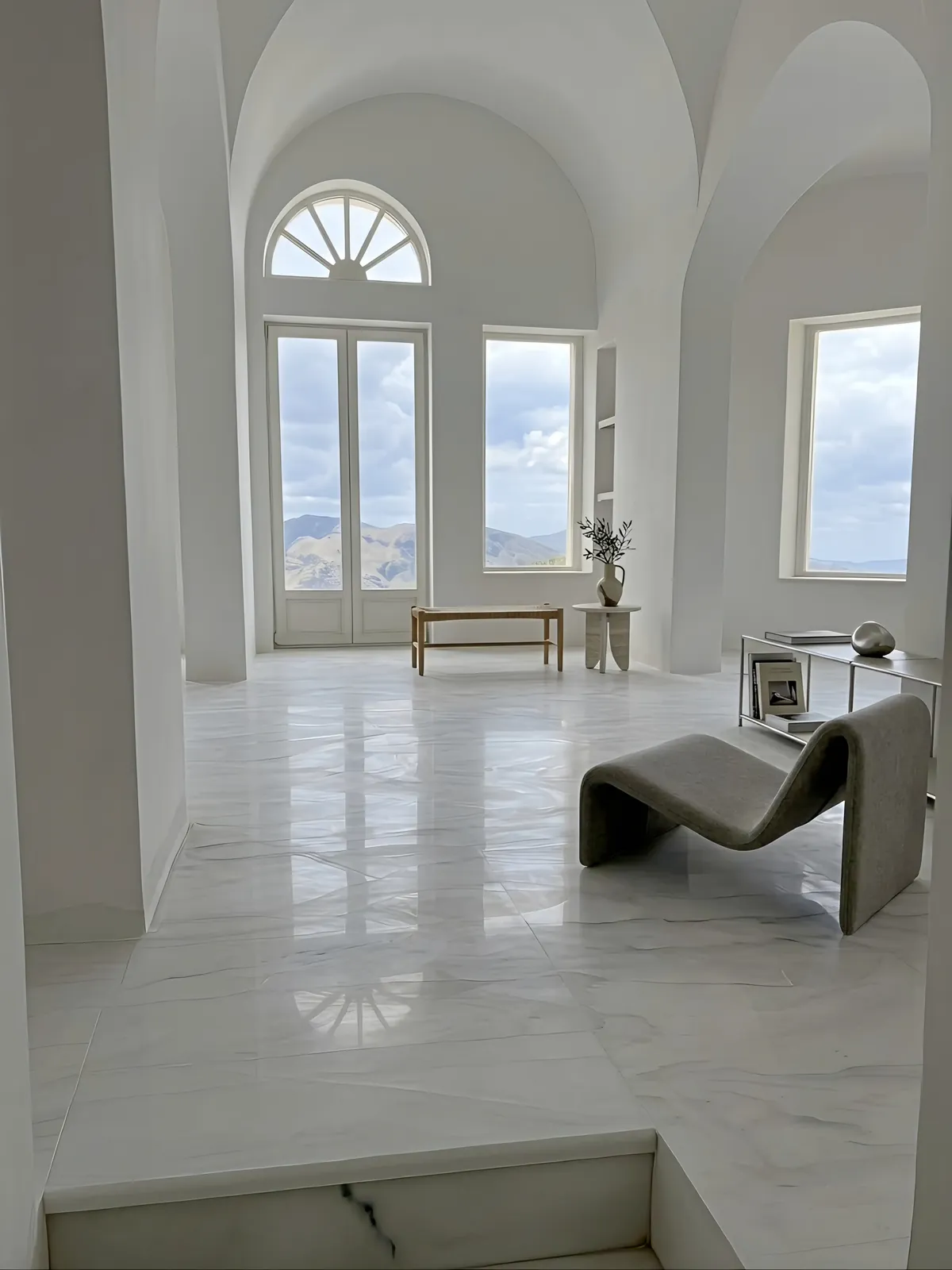
Cleaning, spills, sealing and a few small habits: what you need to know to keep the natural marble in your home looking beautiful for many years to come.
Natural marble has something no other material can copy: it feels alive. The veining, the way it feels under your hand, the way it catches the light. Looked after properly, a marble worktop, floor or basin stays beautiful for many years.
The good news is that caring for it is not complicated. Mostly it is about knowing what marble likes and what it does not.
Get to know your stone
Marble is a calcareous stone, and that means two things.
First, it reacts with acids. Lemon, vinegar, wine, soft drinks, tomato and even some cosmetics can lightly eat into the surface and leave a dull mark, known as etching. Second, it is porous, so liquids like oil, coffee or wine can soak in and leave a stain.
It helps to tell the two apart. An etch mark is damage to the surface itself and will not scrub away. A stain is colour that has been absorbed into the stone. Travertine, a close relative that is also calcareous, needs exactly the same care.
Everyday cleaning
The routine is simple:
- A soft cloth or a non-scratch sponge, and lukewarm water.
- A pH-neutral cleaner made for natural stone.
- A rinse with clean water and a wipe with a dry cloth, so no mineral marks are left behind.
What to avoid: vinegar, lemon, bleach, ammonia-based cleaners, abrasive creams and powders, and scouring pads. Many "all-surface" cleaners are not made for marble, so always check the label. The same goes for bathroom limescale removers, which are usually acidic.
When something spills
Speed matters. Blot it straight away rather than wiping, so the liquid does not spread. Then go over it with a damp cloth and a little neutral cleaner, and dry it off.
For stubborn stains there are specialist products for natural stone. Before you try anything, though, ask us. The wrong product can do more harm than the stain itself.
Small habits, big difference
- Coasters under glasses, especially for wine, juice or fizzy drinks.
- Always cut on a chopping board, never directly on the worktop.
- Hot pans go on a trivet.
- In the bathroom, keep perfumes, creams and soaps on a small tray.
- On floors, a mat at the door keeps out sand, which works like sandpaper underfoot. On Santorini, with its dust and volcanic sand, that counts twice over.
For the same reason, use a soft dust mop on marble floors, and check that the wheels on your vacuum cleaner are not worn.
Sealing: what it does and what it does not
An impregnating sealer soaks into the pores of the stone and reduces absorption. It buys you time to wipe up a spill before it turns into a stain.
What it does not do is make marble acid-proof. Sealed marble will etch from lemon juice just as unsealed marble will.
How often it needs renewing depends on the stone, the finish and how hard the surface works. There is a simple test: put a few drops of water on the surface. If the stone underneath darkens after a few minutes, it is time to reseal. If the water stays beaded, the protection is still holding.
Polished or honed?
A polished finish brings out the veining and the depth of colour, but shows etch marks more easily. A honed, matt finish hides them better and slowly takes on a soft, natural patina.
If the surface looks tired after years of use, professional honing and polishing can bring it back to life. That is a job for a specialist, not a weekend project.
We are still here after installation
Our work together does not end on the day the stone goes in. If you have a question about a cleaner, a stain or sealing, give us a call, Monday to Friday, 08:00 to 16:00.
Thinking about natural marble for your next project? Ask us for a quote and we will help you choose a stone that suits the way you live.